



Fred's Academy
March 22, 2024
Appliance Electrical Theory
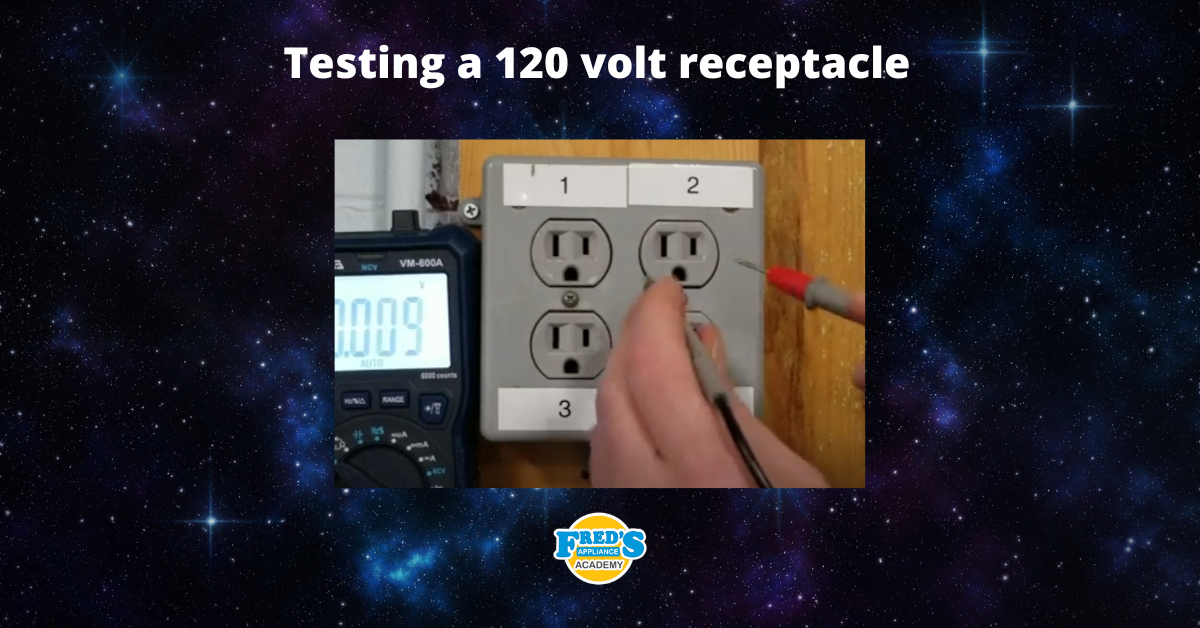
For starters, your outlet tester has six scenarios. You can come across and from top to bottom. They read open, ground, open, neutral, open, hot, hot, and ground, reversed, hot, neutral, reversed, and correct. The little dots to the right represent the order in which the lights will come on. Representing each individual scenario, any scenario you come across with the exception of correct will need to be addressed by a qualified electrician. Here's an example of the outlet tester being used in four scenarios. Scenario number two is the only one that's correct. An outlet in properly working order should have 120 volts plus or minus 10%. The trick to this is that the lights on the tester don't require 120 volts. To illuminate, a technician must verify the proper voltage at an outlet regardless of its working or non-working condition. This process must be done using a multimeter in which the technicians should read 120 between hot and neutral, 120 between hot and ground, and zero between neutral and ground.
Join the industry's best trainers.

(800) 781-1814Text or ring! ring!
Live ChatClick to say hi
Apr. 05, 2024
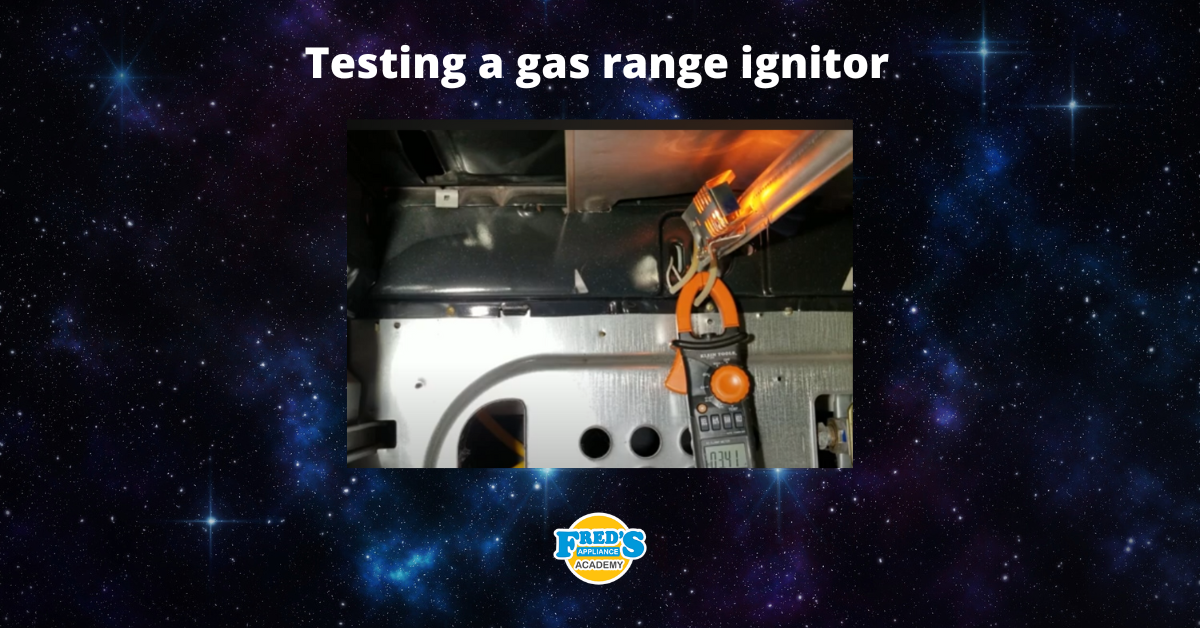
How to test a gas range ignitor

Mar. 29, 2024
Congrats to our graduating March 2024 class
Mar. 22, 2024
How to test a 120 volt receptacle

Mar. 01, 2024
Congrats to our graduating February 2024 class

Feb. 05, 2024
Why Is Your Dishwasher Soap Not Dissolving? (5 Easy Fixes)

Feb. 05, 2024
Refrigerator Dripping Water Inside? 5 Quick Fixes

Feb. 02, 2024
Appliance Industry 2023 Q4 Results

Feb. 02, 2024
Congrats to our graduating January 2024 class
Jan. 26, 2024
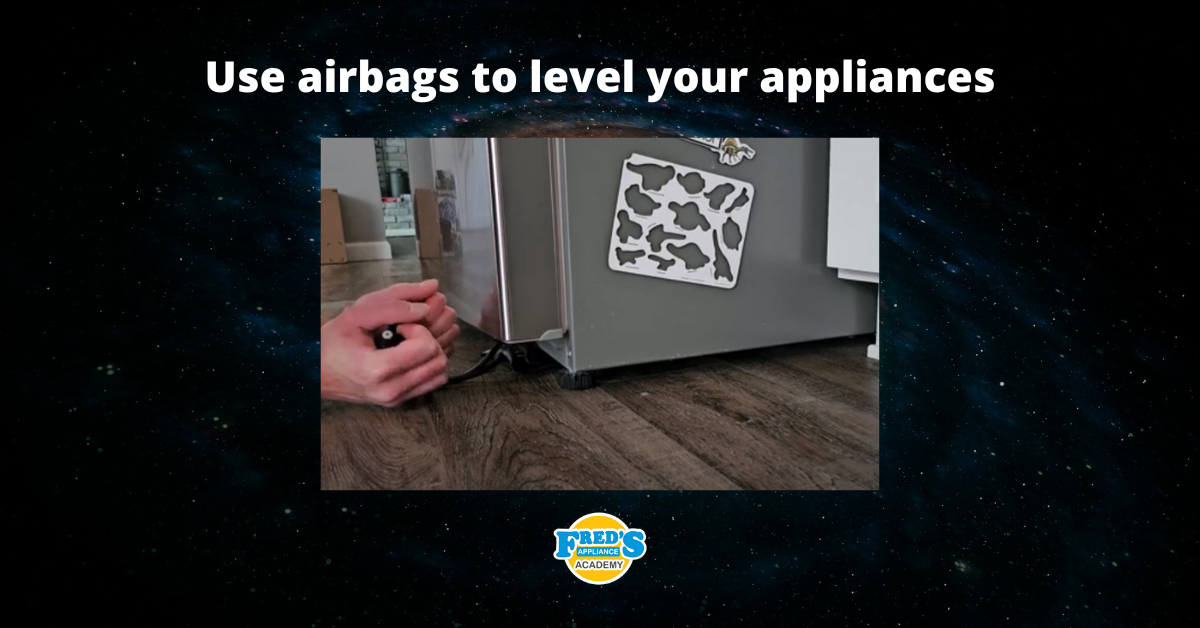
Clever ways to use airbags to level your appliances
Jan. 12, 2024